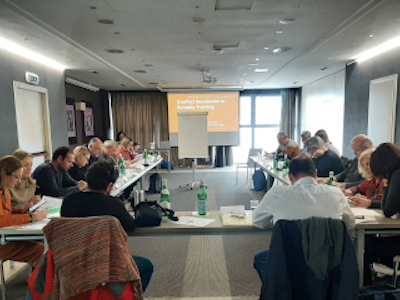
Conflict resolution and 21st century skills
Course description
Course overview and purpose:
This course is designed to equip teachers with both the theoretical understanding and the practical skills required to effectively manage and resolve conflicts in educational and social contexts. Addressing both interpersonal and systemic dimensions, it supports participants in developing essential competencies in communication, dialogue, mediation, negotiation, and conflict transformation, all of which are crucial for fostering positive and inclusive learning environments.
A strong emphasis is placed on experiential learning. Through a variety of innovative and interactive methodologies (such as role plays, real-life case study analysis, structured debates, guided reflection, and collaborative group work) participants will actively engage in simulating and resolving conflict scenarios commonly encountered in schools. Practical activities include practicing active listening techniques, analysing classroom conflict situations, and designing step-by-step intervention strategies. These hands-on experiences allow participants to immediately apply concepts, test different approaches, and reflect on their effectiveness in a supportive learning environment.
By the end of the course, participants will feel empowered to act as role models of positive conflict management, facilitate respectful and solution-oriented interactions among students and colleagues, and contribute to building a school culture where conflicts are viewed as opportunities for growth, learning, and collaboration rather than obstacles.
Learning outcomes:
- Demonstrate proficiency in applying conflict resolution strategies within educational settings.
- Apply innovative cognitive approaches to address and resolve conflicts.
- Utilise effective conflict management techniques to create positive learning environments in schools and society.
Admission information
- Language : English
- Language level prerequisites : B1 or above
- Duration : One week
- Audience :
This course is designed for educators working in pre-primary, primary, secondary, VET, and adult education across Europe. It is open to teachers, trainers, headmasters, school and education managers, administrators, educational counsellors, career counsellors, other school staff, NGO staff, public servants, and policy makers. The course is ideal for individuals seeking to enhance their teaching skills, acquire specialised knowledge in conflict resolution, and contribute to global citizenship education.
- General prerequisites :
Participants are expected to have a good command of the English language to actively engage in the course activities and discussions. No other specific requirements are necessary for admission.
- Maximum number of participants : 20
- Minimum advance reservation : 12 weeks
Course information file
Please, download the full course information file, including examples of daily programme, assessment and validation of learning outcomes and more.